About Us
Zoey
Hi, my name is Zoey. I’m from China and intend to major in mathematics. Outside of my major, I have a strong interest in Chinese web literature. Taking the course A Good (Chinese) Story has given me a valuable opportunity to explore the world of online fiction from both literary and cultural perspectives. For my project, I compare ancient and modern Boys’ Love (BL) novels. Specifically, I examine the differences in their narrative structures and the underlying values they express. This project has deepened my appreciation for the richness and complexity of BL literature, and I look forward to sharing my findings.
Isabella
Hi, my name is Isabella Hu. I’m from China and plan to double major in Sociology and Economics. Outside my academic focus, I’ve been passionate about Chinese web literature since fourth grade. Enrolling in A Good (Chinese) Story allowed me to dive deeper into this world, particularly through a project where I built a website analyzing Boys’ Love (BL) novels—a genre I’d never explored before. Our site compares how BL storytelling evolved from ancient historical settings to modern-day narratives, uncovering shifts in themes and cultural values. This project not only introduced me to BL’s creative complexity but also showed how fiction can reflect societal changes. If you’re curious about hidden cultural codes in stories (or just love a good plot twist!), I’d love for you to check out our website—it’s a gateway to understanding BL’s magic, even if you’re new to the genre!
Irish
My name is Irish Valentine, and I am majoring in Sociology with a focus in medical humanities. Since middle school, I have consumed webnovels and webcomics. In making this website, I used the knowledge I have aquired over the last ten years to launch an investigation into how webmedia reflects culture.
Lu
Hello. I’m Lu, majoring in History. I’ve always been fascinated by the global popularity of BL culture. This interest led me to explore the connection between BL culture and good Chinese stories. Through our website, I aim to share my findings, inviting others who are interested to join our exploration.
Origin
(Noted that images are generated by Doubao AI)
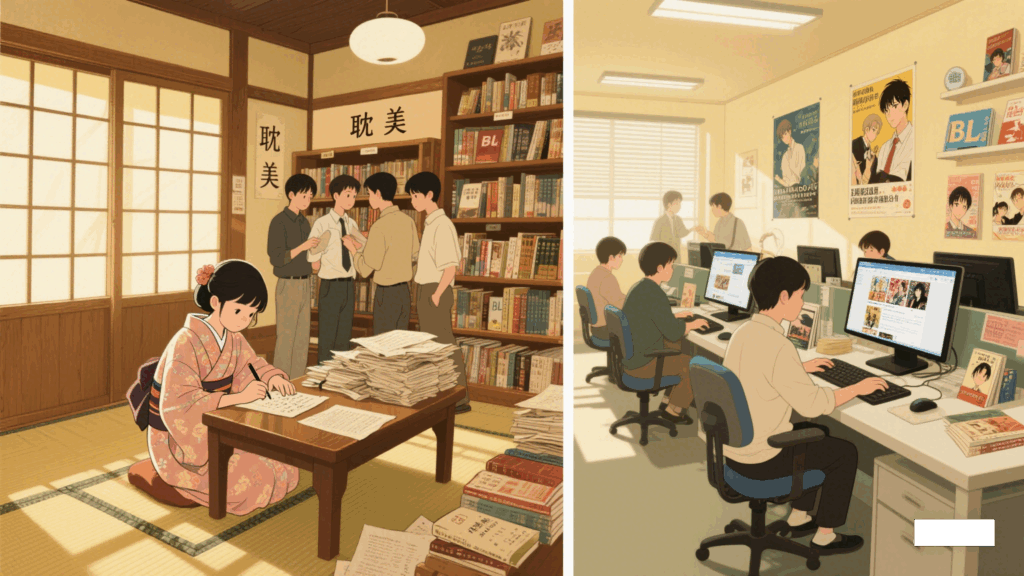
BL (Boy’s Love) culture originated in Japan during the 1930s and 1940s as a branch of Romanticism. By the 1960s, the term “耽美” began to diverge from its original meaning, evolving into a genre in novels that depicted pure, romantic love stories between men—what we now call BL. With the development of the internet, BL culture gradually formed into an industry, and online fiction became one of its major branches.
BL in the United States
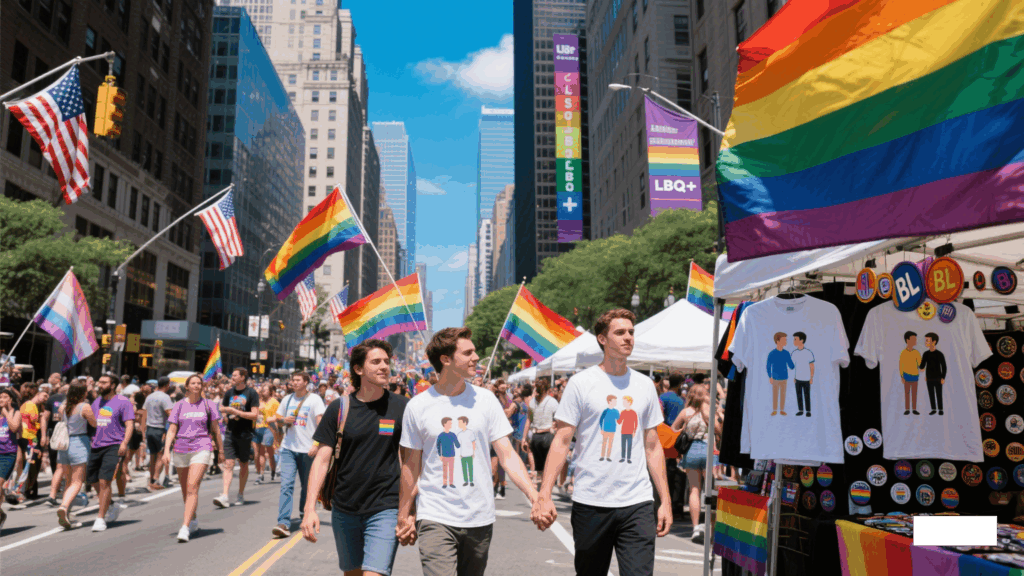
The United States is known for its liberal atmosphere, although societal attitudes toward homosexuality remain a topic of debate. However, As LGBTQ rights movements started, BL culture in the U.S. also began to grow.
BL in China
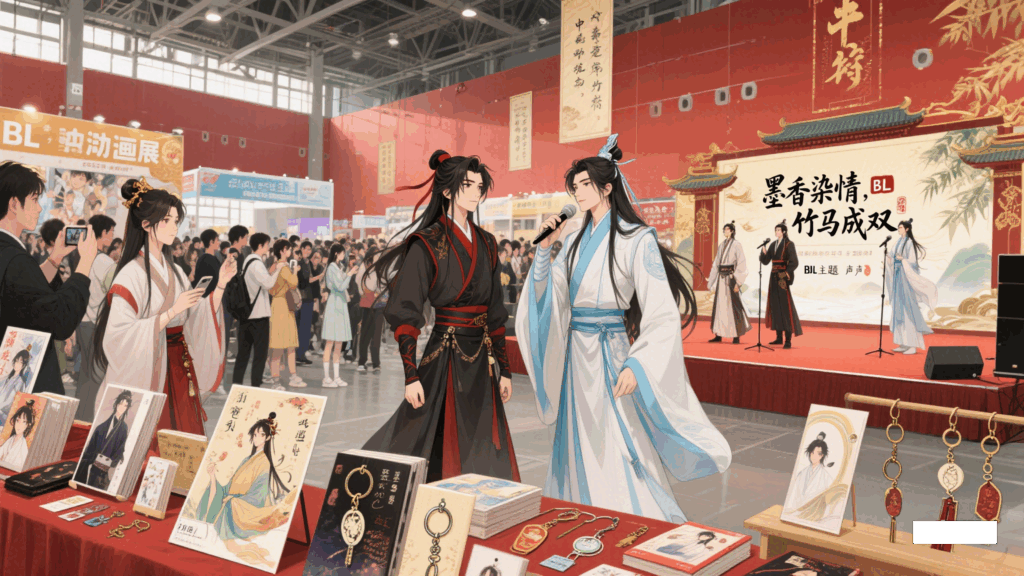
BL culture in China has had different thematic focuses across generations. Early on, BL works imported from Japan influenced a generation of young women to start writing original fiction, often exploring worldbuilding and system elements. Over time, modern urban and school-life settings have also become popular, focusing on the emotional struggles and personal growth of young people—such as stories about innocent crushes and growing up together within school environments.
Cultural Restrictions and Debates
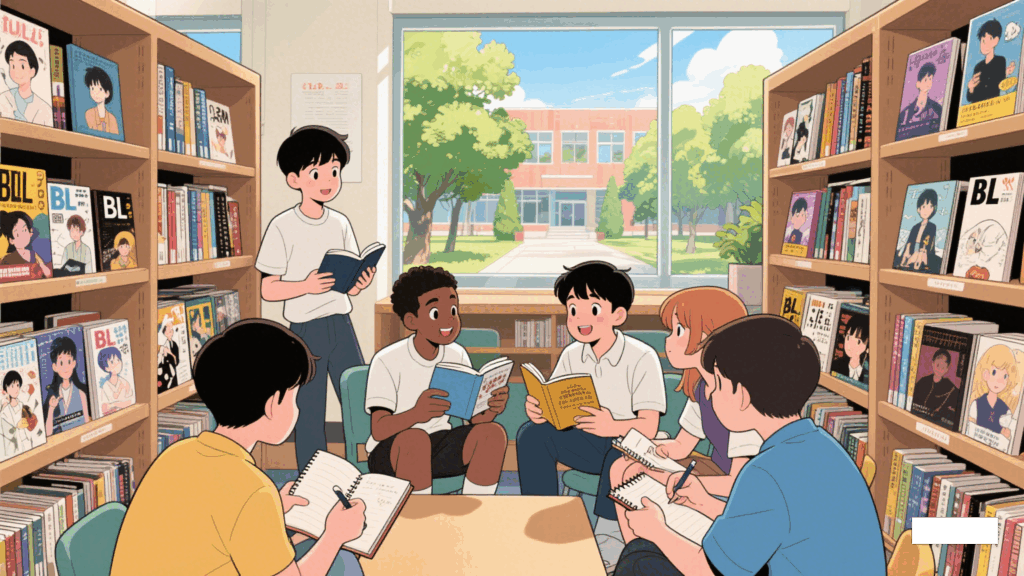
Different countries impose different restrictions on BL culture, based on complex cultural logics. Mainstream societies either accept or reject BL culture to varying degrees, reflecting broader societal values and ideologies.
How has BL been adopted into other cultures and what changes have occurred?
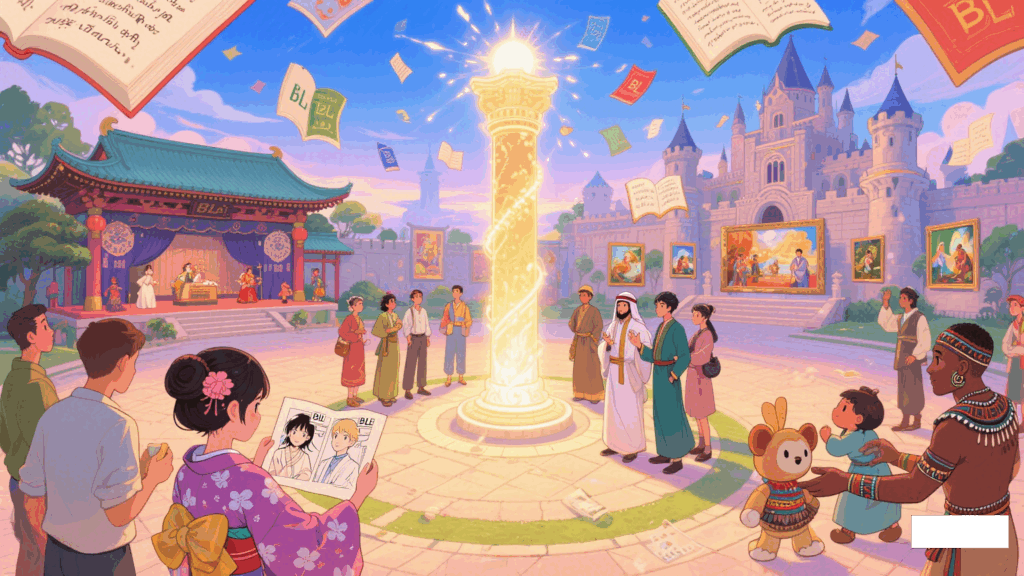
Other cultures have localized Japanese BL elements to align with local traditions. MDZS, for example, integrates rich elements of Chinese traditional culture. MDZS features settings such as spiritual artifacts, and magic—all rooted in Chinese traditions. Wei Wuxian and Lan Wangji wear Hanfu, and their attire follow ancient customs. Emotionally, their relationship expresses restraint characteristic of Chinese culture. Lan Wangji’s love for Wei Wuxian is shown through subtle actions, glances rather than open declarations. This fusion of the BL theme of pure love between men with Chinese cultural of undemonstrative traditions makes the work both emotionally resonant and distinctly Chinese.
Noted that images are generated by Doubao AI